
Table of Contents
The Definitive History of PlayStation: As a Cultural and Collecting Object

Talking about PlayStation from a collector’s perspective means going far beyond simple nostalgic remembrance. It involves analysing technical decisions, internal power struggles within Sony, hardware revisions almost invisible to the general public, peripherals that are now museum pieces, and an industrial evolution that reflects—better than almost any other—the transformation of electronic entertainment over the last three decades.
This article is conceived as a complete work, aimed at expert readers, collectors, restorers and hardware enthusiasts. It is not a quick chronology or a buying guide: it is a full archaeological study of the PlayStation ecosystem, written with calm, depth and respect for every generation.
The Origin of PlayStation: Rupture, Pride and Ambition (1988–1994)
The birth of PlayStation was not a carefully planned strategy, but the direct consequence of corporate humiliation. Ken Kutaragi, a Sony engineer, had demonstrated with the SPC700 chip for the Super Nintendo that Sony could bring real technological value to videogames. The agreement to create a CD add‑on for Nintendo seemed like the first step towards a lasting partnership, but the public rupture at CES 1991 marked a point of no return.
Internally, Sony was divided. Part of the executive board viewed videogames as a childish and unstable market. It was Norio Ohga, then President of Sony, who protected Kutaragi and allowed the project to continue. That decision, driven more by emotion than by financial logic, would end up redefining the company.
The prototype known as the Nintendo PlayStation—today one of the most valuable pieces in global collecting—symbolises this turning point: the exact moment when Sony decided to compete on its own.
PlayStation (PS1): The Birth of the Modern Standard
The first PlayStation was not conceived as a continuation of existing consoles, but as a total break from the established model. Sony had no previous legacy in the sector, which allowed it to observe the market without ideological constraints. The result was a machine designed with developers in mind rather than raw specifications, something unusual at the time.
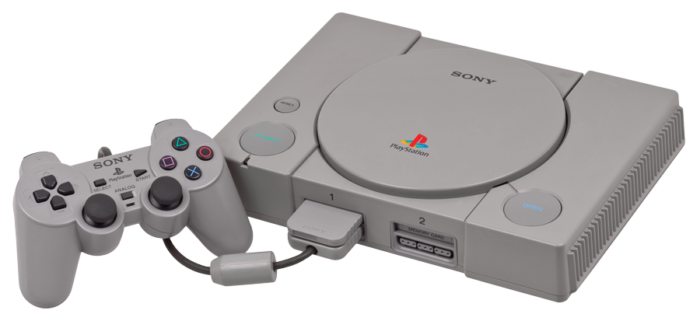
From a technical standpoint, the PS1 was built around a MIPS R3000A CPU running at 33.8 MHz, paired with a GPU capable of handling polygonal graphics with unprecedented fluidity in a home console. Although it lacked true perspective correction and suffered from the well‑known texture “warping” effect, this limitation ended up defining a distinctive aesthetic that is immediately recognisable today. For collectors, this is not a flaw, but a technical hallmark.
The internal architecture evolved over time. Early Japanese SCPH‑1000 and European SCPH‑1002 revisions featured higher‑quality discrete components, RCA outputs and an internal design closer to Kutaragi’s original vision. Over the years, Sony integrated chips, reduced costs and simplified motherboards, resulting in more reliable but also more industrialised models. This process culminated in the PSone, a compact revision that symbolised the system’s full maturity.
From a market perspective, the PS1 redefined the videogame audience. Sony deliberately targeted a more adult image, supported by disruptive marketing campaigns and a catalogue that tackled themes previously uncommon in the medium. Success was not immediate in all territories, but once critical mass was reached, the console became the central pillar of the industry for more than half a decade.
For collectors, the original PlayStation represents ground zero: the precise moment when home videogames ceased to be a niche children’s product and became global popular culture.
PlayStation 2: Technical Ambition and Absolute Dominance
The PlayStation 2 was conceived from the outset as more than just a console. Sony wanted to create a central living‑room device, capable of playing DVDs, connecting to the internet and acting as a total entertainment platform. This vision, ahead of its time, explains both its massive success and many of its technical contradictions.
At the heart of the PS2 was the Emotion Engine, a CPU extremely advanced for its era, designed to handle large volumes of vector calculations. On paper, the console offered impressive power, but its architecture required deep expertise to be fully exploited. Japanese studios with early access to the hardware achieved extraordinary results, while many Western developers never fully mastered it.
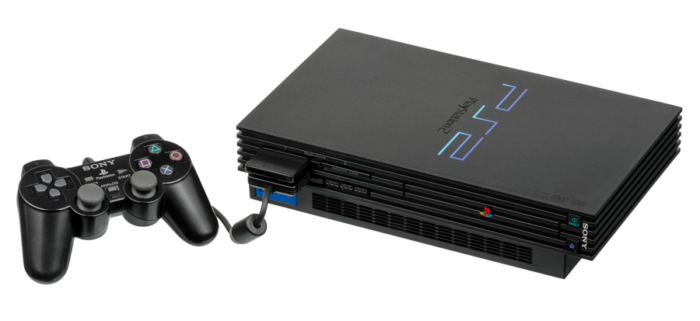
Early FAT revisions featured complex internal designs, sensitive optical drives and cooling systems pushed to their limits. Over time, Sony introduced progressive changes to improve reliability, although some mid‑generation revisions suffered from well‑known premature laser wear issues. The Slim model, released years later, drastically simplified the design at the cost of losing internal expansion options—a decision that still divides collectors today.
In terms of software, the PS2 is probably the most diverse console ever created. From multi‑million‑pound productions to low‑budget experiments, everything had a place within its ecosystem. This diversity explains why, even decades later, it remains one of the most active platforms in collecting and preservation circles.
The PlayStation 2 did not merely dominate its generation: it set a commercial and cultural ceiling that no other console has managed to surpass. For many, it represents the highest point of the physical videogame era.
PSP: Portable Power and Questionable Decisions
Technically, the PSP was a console ahead of its time. Its screen, graphical power and multimedia capabilities made it a highly desirable object. However, the UMD format, slow loading times and rampant piracy severely hindered its commercial life.
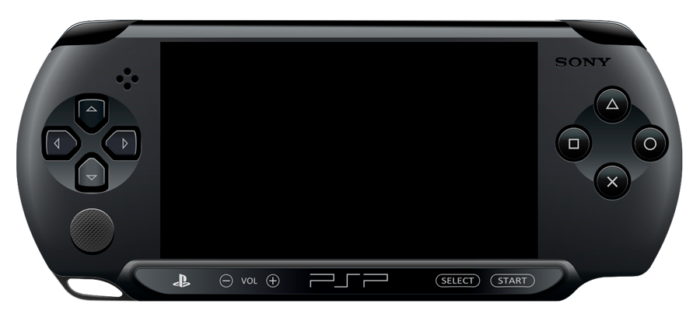
At the hardware level, the PSP went through multiple revisions (1000, 2000, 3000, Go), each introducing changes in weight, RAM and screen quality. Today, the PSP Go is one of the most sought‑after models due to its rarity and failed concept.
PlayStation 3: Overconfidence and Creative Maturity
The PlayStation 3 launched under the weight of excessive expectations. After the unprecedented success of the PS2, Sony opted for a radical technological solution: the Cell processor. Developed alongside IBM and Toshiba, Cell was designed for high‑performance computing rather than videogames, a choice that defined the entire generation.
Internally, the PS3 combined the Cell with the RSX graphics chip, creating a powerful but extraordinarily complex architecture. Programming for it required an almost artisanal approach, and during its early years many multiplatform titles performed worse than on rival systems. This seriously damaged the console’s reputation at launch.
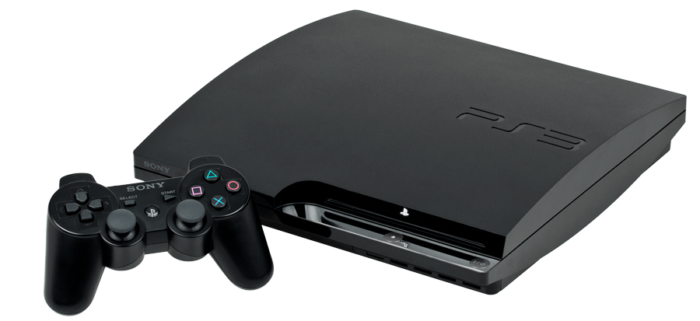
Early PS3 FAT models included full PS2 backwards compatibility, initially through hardware and later via software—an extremely valued feature among collectors today. However, these models were also the most affected by overheating issues and the infamous YLOD, a direct consequence of lead‑free solder and tightly constrained thermal designs.
Over time, Sony simplified the hardware, reduced power consumption and released much more stable Slim and Super Slim models. In parallel, first‑party studios began to master the system, leading to a late‑generation period marked by works of outstanding technical and narrative quality.
The PS3 is now a reassessed console. Its trajectory shows that innovation without balance can be as dangerous as a lack of ambition—but also that a platform can redeem itself through creative talent.
PS Vita: Abandoned Technical Excellence
The PS Vita was a technically brilliant console and a commercial tragedy. Its OLED screen, power and controls were exceptional, but Sony never truly committed to it. Proprietary memory cards and a lack of first‑party support sealed its fate.
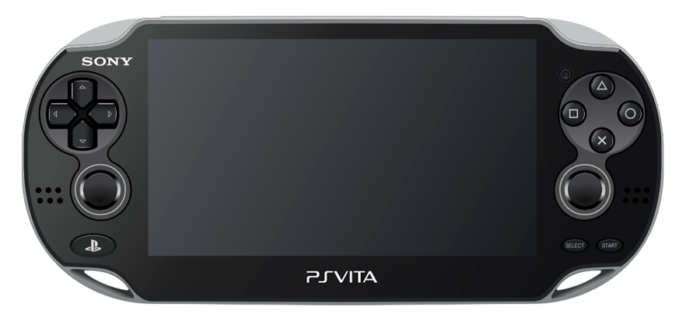
Today, it is one of the most appreciated consoles among collectors and the homebrew community.
PlayStation 4: Pragmatism, Listening and Consolidation
The PlayStation 4 represents a conscious correction of the mistakes made in the previous generation. Sony abandoned unnecessary experimentation and adopted an x86 architecture similar to a PC, greatly easing development. This seemingly conservative decision proved key to the system’s success.
Internally, the PS4 combined integrated AMD CPU and GPU components in a balanced design that prioritised efficiency and ease of programming. While it was not the most powerful console of its generation, its real‑world performance and strong development tools allowed studios to get the most out of it from day one.
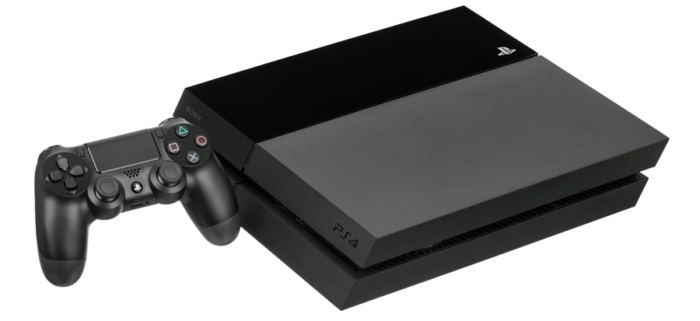
Slim revisions improved power consumption and noise levels, while the PS4 Pro introduced a mid‑step approach to 4K through image reconstruction techniques. This model, aimed at more demanding players, has become a notable piece in modern collecting.
Culturally, the PS4 consolidated the model of large‑scale narrative productions now associated with the PlayStation brand. At the same time, it served as a transitional platform towards digital distribution—a shift that raises new long‑term preservation challenges.
The PS4 did not reinvent videogames, but it achieved something equally difficult: stabilising the industry during a period of profound transformation.
PlayStation 5: Future Architecture and Present Debate
The PlayStation 5 was designed to solve long‑standing development problems, particularly those related to loading times and data management. Its core strength is not just raw power, but a custom SSD that redefines how games access information.
Technically, the PS5 once again relies on AMD, using a Zen 2 and RDNA 2‑based architecture. This combination delivers a clear generational leap, but the real innovation lies in its input/output controllers, capable of moving data at unprecedented speeds for a home console.
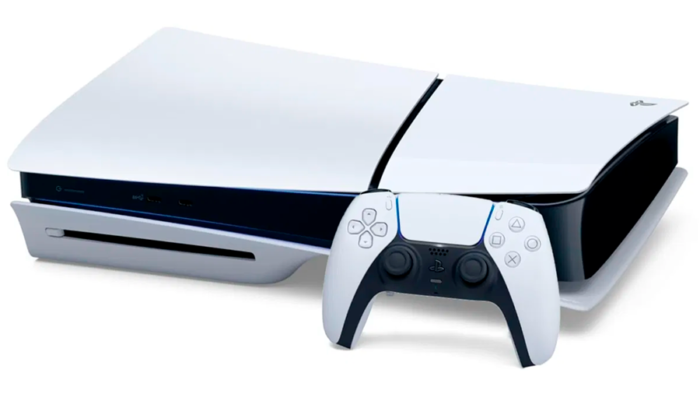
The console’s industrial design—bold and controversial—reflects a desire to clearly differentiate itself from previous generations. Early internal revisions already show adjustments in materials and cooling, aspects that will be crucial for future collectors.
The DualSense controller introduces new forms of interaction through adaptive triggers and advanced haptic feedback, although its long‑term durability remains a topic of debate. If sustained over time, such innovations could meaningfully shape the gaming experience.
The PS5 is still in the early stages of its life cycle. For collectors, it represents an evolving system whose true legacy can only be assessed with historical perspective.
Sony Japan, Sony America and Sony Europe: Three Visions, One Brand
Sony Japan was always the creative heart of the company, but over time it lost influence to Sony America, which focused more strongly on the Western market. Sony Europe historically acted as an intermediary, adapting catalogues and strategies.
This internal tension explains decisions such as the abandonment of the Vita, the shift in focus of Japanese studios and the increasing westernisation of the brand.
Rare Peripherals, Special Editions and Collector Pieces
The PlayStation universe is not limited to consoles and games. For advanced collectors, true value is often found at the margins: forgotten accessories, promotional editions, regional runs and objects never intended for public release.
The Japanese PocketStation is a paradigmatic example. Designed as a companion for certain PS1 games, it was never officially released outside Japan and is now an essential piece in any collection aspiring to completeness. A similar case is the Japanese PSX, a hybrid digital recorder and console that represents one of Sony’s most forward‑thinking—and poorly understood—ideas.
Added to this are special controllers, internal‑use transparent shells, development adapters, experimental cameras and peripherals that received minimal support but today reveal more about Sony’s thinking at each stage than any internal document.
Chronological Table and Historical Context of PlayStation Launches
Beyond official dates, each PlayStation launch must be understood within its technological and cultural context. The PS1 in a Europe still dominated by microcomputers is not the same as the PS3 during the rise of online gaming, or the PS5 in a market shaped by digital distribution.
This chronological reading allows collectors to understand why certain revisions exist, why some models had limited distribution and why specific industrial decisions shape today’s retro market.
Current Prices, Rarities and the Retro Market
The PlayStation retro market has entered a phase of maturity. It is no longer just about nostalgia, but about conservation. Early complete PS1 revisions, PS2 FAT models with original accessories, fully functional backwards‑compatible PS3s, and pristine OLED PS Vita units have all seen sustained revaluation.
Special attention should be paid to promotional units, press consoles, non‑retail versions and internal materials that never passed through traditional commercial channels. Their value lies not only in rarity, but in their ability to document specific stages of Sony’s history.
PlayStation 6: Rumours, Direction and Expectations

Although not yet announced, the PS6 appears to be heading towards technical continuity, with particular emphasis on artificial intelligence, services and backwards compatibility. Sony’s challenge will be to balance innovation with preservation.
Ultra‑Niche Curiosities and Production Anomalies
One of the most fascinating—and least documented—areas of PlayStation collecting is that of anomalies. Spanish regional bundles with game combinations unseen elsewhere, reused boxes with corrective stickers, manuals printed with pagination errors or incorrect languages, and misaligned silkscreen printing all form part of an industrial reality far more artisanal than is often assumed.
There are also promotional consoles for press and retail, often lacking commercial serial numbers, featuring special firmware or unmarked shells. Many were never intended to survive beyond the launch period, making them extremely scarce today.
These details, invisible to the general public, allow collectors to date a unit, identify its origin and understand how Sony’s production and distribution chains actually operated.
Conclusion: PlayStation as a Living Legacy and a Manifesto of Collecting
Collecting PlayStation is not about accumulating plastic, cables and circuits. It is about preserving decisions, successes and failures from an industry that grew too fast and left more traces behind than it often admits. Every opened console, every identified motherboard, every compared revision is a way of reading history from the inside, not from a display case.
In the face of planned obsolescence and the dematerialisation of videogames, collecting becomes an almost political act. Preserving a working PS1, a PS2 with its original hard drive, or a backwards‑compatible PS3 is not nostalgia—it is cultural resistance. It is a refusal to let decades of engineering, design and creativity disappear beneath layers of services and temporary licences.
The collector does not seek rarity or financial value alone. They pursue context, authenticity and understanding. They want to know why one console failed, why another succeeded, why a peripheral was abandoned or why an internal revision changed the fate of an entire system.
Seen this way, PlayStation ceases to be a brand and becomes a living archive—one not preserved in official museums, but on private shelves, in improvised workshops, in specialised forums and in conversations like this one. As long as there are people willing to document, repair and play these machines with knowledge and respect, the history of videogames will remain safe.
Because collecting PlayStation is not about looking to the past—it is about preventing it from being lost.